
Laser hair removal – how does light work in the fight against unwanted hair?
Blog BackTable of Contents:
- How laser works?
- Step-by-step treatment process
- Effectiveness and number of treatments
- Why is laser hair removal an effective method?
Laser depilation is one of the most advanced methods of hair removal and has gained popularity for its effectiveness and long-lasting results. Although the treatment may seem complicated, it is based on the laser light, which precisely targets the hair structure, destroying it from the inside and reduces its growth. In this article, we explain the mechanism, how laser light works in the fight against unwanted hair, what happens during the treatment and why it is one of the most effective hair removal method.
How laser works?
The basis of laser hair removal is the phenomenon of selective photothermolysis. This means that the laser emits a beam of light of a specific wavelength, which is absorbed by melanin - the natural pigment in hair. When melanin absorbs the light energy, it is converted into heat, leading to the heating and destruction of the hair bulb along with the hair follicle. The darker the hair, the more melanin there is, so treatments on dark hair are more effective. Thanks to the precisely selected wavelength, the laser only acts on the melanin in the hair, without damaging the surrounding skin tissue. The damage of the regenerative structures of the hair are permanent, so follicles stop producing new hair, thus preventing them from growing further. Over time it leads to a reduction in the number of hairs and their eventual disappearance. The process is most effective in the anagen phase - the phase of active hair growth.
Step-by-step treatment process
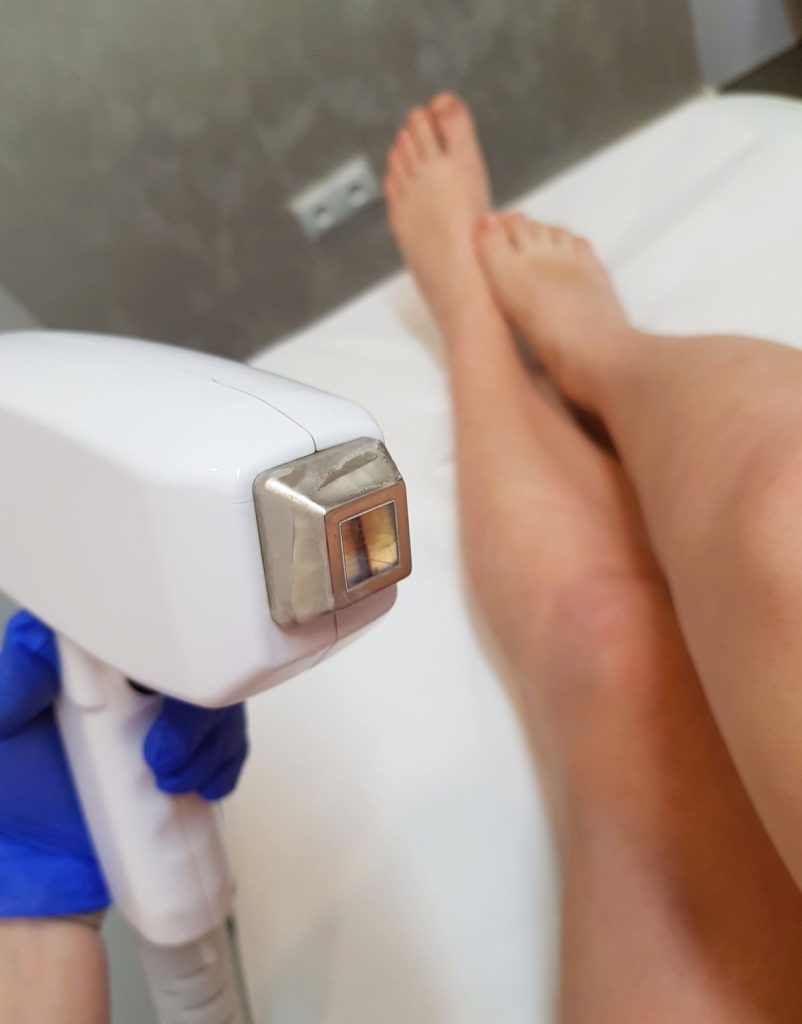
During a laser hair removal treatment, the specialist first assesses the skin and hair to adjust the laser parameters to suit the individual needs. A key factor is the contrast between skin and hair colour, as dark hair on light skin best absorbs the laser light. Wavelength matters here: different lasers, such as diode or alexandrite, have different wavelengths, which in turn are suited to different skin and hair types. Before the treatment begins, a cooling gel is applied to the skin to protect the epidermis and reduce the sensation of heat. The laser head is then applied to the skin and the device emits short pulses of light. You may feel a slight pinching or warmth during the treatment, but modern devices often have cooling systems to increase patient comfort and protect the skin from overheating. The treatment lasts from a few minutes to an hour, depending on the size of the area to be epilated.
Effectiveness and number of treatments
To achieve the full effects of laser hair removal, a series of treatments is required. The laser only works on hair in the growth phase (anagen), as only then is the melanin fully active and able to effectively absorb the laser light. However, not all hairs are in this phase at the same time - some are in the resting (telogen) or transitional (catagen) phase. Therefore, treatments must be repeated at intervals of 4-6 weeks to destroy hair that was inactive during previous sessions. At the end of the series, usually consisting of 6-8 treatments, most of the hair is permanently removed. The hair that may grow back is usually thinner, lighter and less visible.
Why is laser hair removal an effective method?
Laser hair removal stands out from other methods because of its permanent effect. Unlike shaving or waxing, which only removes part of the hair above the skin surface, the laser destroys the structure responsible for hair growth. As a result, the effects are long-lasting and regrowing hair completely disappears over time. In addition, laser hair removal is safe and less painful than mechanical methods such as waxing or electric epilators. Although investing in a series of treatments may seem expensive, its effectiveness in the long term makes it one of the most cost-effective methods of hair removal. It is also a much more comfortable method compared to mechanical methods (shaving, waxing), it also reduces skin irritation and eliminates the problem of ingrown hairs. What's more, modern lasers allow the treatment to be tailored to different skin types, making this method accessible to a wide range of patients.
Laser hair removal is a technology that is revolutionising the approach to hair removal. Thanks to the precise action of light, the treatment not only removes hair, but also improves comfort for those who struggle with ingrown hairs or irritation. If you dream of smooth skin and want to say goodbye to cumbersome hair removal methods once and for all, lasers are the perfect choice.